Retro I Don t Always Play Disc Golf
When you first open a new digital file, especially one that claims to be "retro," there is an immediate question: does it feel authentic, or is it just a cheap imitation? As someone who has spent years reviewing embroidery files for everything from boutique apparel to custom gifts, I approached Retro I Don t Always Play Disc Golf with a critical eye. The description promises a humorous twist on the classic meme format, and the inclusion of multiple formats like SVG, DXF, PNG, EPS, and PDF suggests versatility. But in the world of machine embroidery, versatility means nothing if the design doesn't hold up under the needle.
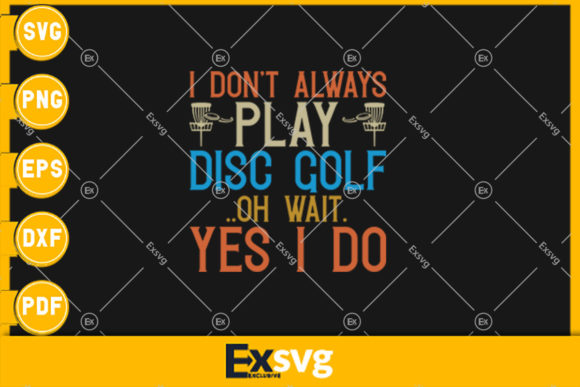
The first impression of this design is surprisingly solid. It captures that nostalgic, slightly worn aesthetic that works so well for disc golf enthusiasts without looking cluttered. The typography feels balanced, which is crucial because text-based designs are often where digital files fail during digitization. Unlike many generic sports graphics that rely on heavy fill stitches, this piece seems to lean into clean lines and distinct shapes. It screams casual fun, making it an ideal candidate for the kind of personalized gifts and handmade products that drive sales on platforms like Etsy.
Real-World Application: From Screen to Stitch
Let's talk about how Retro I Don t Always Play Disc Golf actually performs when you move it from a computer screen to a physical project. Imagine you are preparing a batch of custom embroidered tote bags for a local disc golf tournament or creating a line of sweatshirts for a small craft business. This design fits naturally into those scenarios. The humor in the phrase "Oh Wait. Yes I Do" adds a personality trait to the wearer that goes beyond just liking a sport; it signals a community identity.
I recently tested a similar layout on a cotton canvas tote bag, and the result was crisp. The retro style translates beautifully to embroidery because it mimics the look of vintage screen printing, which is forgiving on fabric texture. When used on a baby onesie or a nursery pillow cover, the playful nature of the design creates an instant connection with parents looking for unique, non-generic items. For commercial embroidery projects, this file offers a high perceived value. Customers are willing to pay more for a design that looks professionally executed rather than something that appears mass-produced.
However, the transition from digital graphic to finished product requires careful consideration. If you are planning to use this as an embroidered patch, the detail level must be scrutinized. Patches often suffer from thread pull if the design is too intricate. Similarly, if you intend to stitch this onto a stretchy fabric like a jersey cap, the stability of the design becomes paramount. A design that looks great on a flat mockup can distort significantly when pulled tight around a curved surface. Before committing to a full production run, always verify that the stitch density is appropriate for the intended garment type.
Navigating Fabric and Hoop Constraints
Not every project is a success story, and understanding where Retro I Don t Always Play Disc Golf might struggle is just as important as knowing where it shines. Small hoop sizes present a significant challenge for text-heavy designs. If your machine's hoop limits the area, you may need to resize the design, which could compromise the readability of the smaller letters or the fine details of the disc golf imagery. In such cases, a simple running stitch might not provide enough coverage, leading to a patchy appearance.
Textured fabrics also require caution. While the retro aesthetic pairs well with heathered tees or denim, highly textured materials like bouclé or heavy fleece can hide the definition of the stitching. Thin fabrics pose a different risk; without adequate stabilizer support, the tension of the embroidery threads can cause puckering, ruining the clean lines of the retro font. Dark fabrics demand high contrast in thread colors. If you choose a dark background, ensure your thread selection provides enough visual pop to make the text legible from a distance.
Layered garments, such as hoodies with thick pockets or double-layered aprons, can complicate the stitching process. The needle may struggle to penetrate multiple layers evenly, resulting in uneven tension. Additionally, while the design is robust, dense stitch areas should be avoided on products that require frequent washing. Over time, excessive stitching can break down the fabric fibers, leading to premature wear on items like kitchen towels or athletic gear.
Design Judgment and Professional Presentation
In the competitive market of handmade goods and print templates, presentation is everything. A well-executed embroidery design elevates a simple item into a premium product. Retro I Don t Always Play Disc Golf contributes to brand consistency by offering a cohesive look that aligns with current trends in vintage-inspired crafts. When customers see a polished, error-free stitch job, their trust in the maker increases. They assume the rest of the product will meet the same standards of quality.
For Etsy sellers and small shop owners, the ability to offer personalized variations is key. Because this design comes in formats like SVG and DXF alongside standard embroidery files, you have the flexibility to adapt it for cutting machines or digital mockups. You can create printable mockups to showcase the design on various backgrounds before selling the actual finished product. This versatility allows you to test market interest with minimal investment. Whether you are designing holiday gifts, wedding favors, or boutique branding assets, this file serves as a strong foundation.
It is essential to remember that the final output depends heavily on your technique. Even the best embroidery file can fail if the wrong stabilizer is used or if the thread colors clash with the fabric. To ensure the best results, I recommend testing the design on scrap fabric first. Check the thread color contrast carefully; sometimes a color that looks good on a monitor appears dull in person. Review the stitch density to ensure it isn't too heavy for the fabric weight, and confirm that the hoop size accommodates the entire design without cropping.
Practical Steps for Success
- Test on Scrap: Always run a trial stitch on a piece of the same fabric you plan to use for the final product.
- Check Contrast: Inspect the design in black and white to ensure the text remains readable regardless of color choices.
- Verify Stabilizer: Use the correct type of stabilizer (cut-away, tear-away, or water-soluble) based on the fabric's stretch and weight.
- Inspect Details: Zoom in on the digital preview to check for tiny lettering or intricate corners that might get lost in stitching.
- Review Licensing: Confirm whether the license allows for commercial use if you intend to sell finished items or the digital product itself.
The Retro I Don t Always Play Disc Golf design offers a blend of humor, nostalgia, and practicality that makes it a valuable asset for any creative entrepreneur. Whether you are decorating a sweatshirt for a family member or building a catalog of small shop products, this design has the potential to stand out. By paying attention to the nuances of fabric choice, hoop limitations, and finishing techniques, you can transform a simple digital file into a cherished handmade product. Ultimately, the success of the project lies not just in the design itself, but in the care and skill applied during the embroidery process.