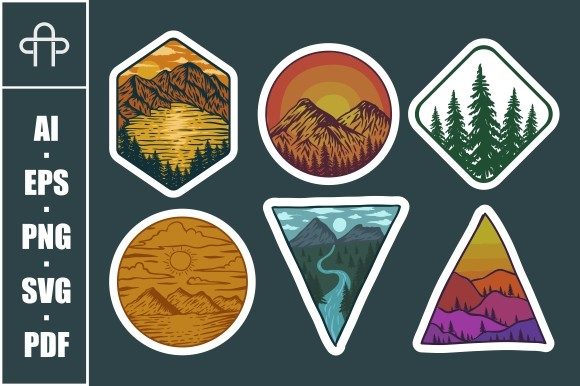
Adventure Landscape Retro Stickers
When I first opened the folder for Adventure Landscape Retro Stickers, I didn't just see a vector illustration; I saw a potential bestseller waiting to happen. As a designer who spends more time than I care to admit troubleshooting thread breaks and checking stitch density, my initial reaction is always grounded in practicality. Does this design hold up under the needle? Will it look as good on a customer's tote bag as it does on a screen? The answer, surprisingly, is yes, provided you understand where its strengths lie.
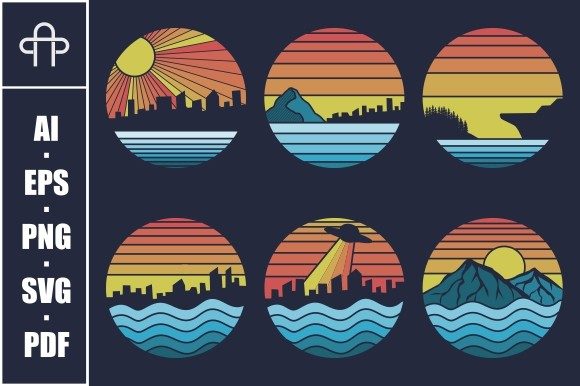
The mood of Adventure Landscape Retro Stickers is instantly nostalgic. It captures that specific vintage aesthetic popular in outdoor gear and retro travel posters. The lines are clean, the shapes are bold, and the composition feels balanced without being cluttered. For an embroidery designer, this balance is everything. Too much detail often translates to muddy stitching on small items, while too little can look cheap. This design sits in a sweet spot where the visual personality shines through even after the fabric has been stitched and pressed.
I recently tested this concept with a real-world scenario: creating a line of custom embroidered patches for a local hiking club. We needed something that felt authentic but durable enough to withstand the elements. Adventure Landscape Retro Stickers offered the perfect visual anchor. The layout naturally lends itself to circular or shield-shaped patches, which are staples in the craft business. When I pulled up the files, I noticed how the key elements were spaced out. This spacing is crucial because it allows the machine to handle the transition between different stitch types without tangling the thread.
Real-World Performance on Common Projects
Let's talk about where this design actually works best in your inventory. If you are an Etsy seller looking to expand into physical goods, this file is a powerhouse for tote bag designs. The retro vibe pairs beautifully with canvas, and the simplicity of the landscape ensures it doesn't get lost in the weave of the fabric. I imagine seeing this stitched onto a sturdy canvas tote in earthy tones like olive green, mustard yellow, or burnt orange. The contrast would pop, making it a highly desirable item for anyone heading to the farmers market or a coffee shop.
Beyond bags, this design is incredibly versatile for sweatshirt embroidery and hoodies. The chest pocket area is a prime real estate for smaller, focused graphics, and the compact nature of the sticker format fits perfectly there. However, don't limit yourself to apparel. I've seen designers take similar layouts and apply them to kitchen towels and aprons for boutique brands. The "retro" theme fits right in with farmhouse decor trends. A set of embroidered tea towels featuring these landscapes could easily become a signature product for a home goods shop.
For those selling to parents, baby embroidery is another strong contender. Soft cotton onesies or bibs often benefit from simple, charming graphics. Adventure Landscape Retro Stickers provides a whimsical touch that feels modern yet timeless. It avoids the cutesy clichés that saturate the nursery market, offering instead a sense of exploration that appeals to adventurous families. The clean lines mean it won't snag on delicate baby skin, and the lack of excessive texture makes it comfortable against sensitive skin.
Navigating the Technical Challenges
While the design is promising, no professional review is complete without discussing where things can go wrong. Every embroidery file has its limitations, and understanding them is what separates a hobbyist from a pro. One of the primary concerns with any graphic intended for stitching is the hoop size. If you plan to use this on a curved surface like a baseball cap, you need to ensure the design scales down correctly without losing definition. Small details in the original vector might disappear if you try to force them into a 4x4 hoop on a tight curve.
Another critical factor is fabric texture. While this design works well on smooth fabrics like twill or denim, textured materials can be tricky. On a rough, heavy wool or a boucle knit, the fine lines of the landscape might get lost or cause the thread to bunch up. Similarly, stretchy fabric requires extra caution. If you are applying this to a jersey t-shirt or a stretchy activewear piece, you must use a high-quality stabilizer to prevent puckering. Without proper support, the tension of the stitches will distort the fabric, ruining the crisp look of the retro style.
Dark fabrics present their own set of challenges. To make Adventure Landscape Retro Stickers stand out on a black hoodie or navy tote, you will likely need to adjust your thread colors significantly. You might need to add a background fill or a border to create separation between the design and the fabric. Ignoring this step can result in a flat, invisible logo that fails to engage the buyer. Always test your color choices before committing to a full production run.
Maximizing Visual Appeal and Value
The ultimate goal of any commercial embroidery project is to build trust and perceived value. Customers pay for quality, and nothing screams "low quality" like a poorly digitized image that looks fuzzy or has loose threads. The clean geometry of Adventure Landscape Retro Stickers helps mitigate this risk. Because the design relies on distinct shapes rather than complex gradients, it translates well into satint stitch and fill stitch techniques.
When executed correctly, the finished product exudes professionalism. A well-stitched patch or a crisp logo on a custom apparel item signals that the brand cares about details. This attention to detail directly impacts customer engagement and repeat business. People are more likely to buy from a shop that presents their products with care and precision. Furthermore, the versatility of this design means it can serve as a cohesive element across multiple product lines, reinforcing brand consistency.
However, not every application is suitable. Avoid using this design for decorative accents on items that require frequent washing and heavy abrasion, unless you reinforce it heavily. Also, be wary of trying to incorporate tiny lettering or extremely intricate corners if your machine isn't high-end. These areas are prone to breaking or blurring, which can detract from the overall aesthetic.
Essential Designer Notes Before You Start
If you are ready to bring this design to life, here is my checklist for success. First and foremost, test the design on scrap fabric before cutting into your final material. This is non-negotiable. It allows you to check stitch density and see how the threads interact with your specific fabric choice. You might find that you need to tweak the density settings to avoid bulkiness or gaps.
Always inspect the small details in the original vector. Ensure that the paths are closed and that there are no stray points that could confuse the embroidery software. Review the design in black and white mockups to verify that the contrast holds up without color distractions. Compare how it looks on light versus dark backgrounds to determine if you need to adjust the underlay or top thread colors.
Don't forget the basics: use the proper stabilizer for your fabric type. Cut-away stabilizers are usually best for durability on items like caps and bags, while tear-away might suffice for lightweight garments. Confirm whether the license allows for personalized gifts and commercial sales. Many digital assets have restrictions on how they can be used, so read the terms carefully before listing your products on platforms like Etsy.
Finally, remember that Adventure Landscape Retro Stickers is a tool, not a magic wand. Its success depends on your skill as a designer and decorator. By respecting the technical constraints and leveraging the design's natural strengths, you can create stunning handmade products that customers will love. Whether you are building a small shop or expanding your current offerings, this design asset offers a solid foundation for creative and profitable projects.